



Within the fingers of malicious actors, AI instruments can improve the dimensions and severity of all method of scams, disinformation campaigns and different threats

15 Jan 2025
•
,
5 min. learn
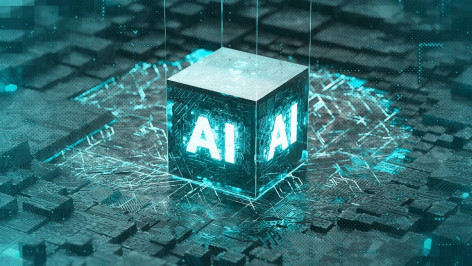
AI has supercharged the cybersecurity arms race over the previous yr. And the approaching 12 months will present no respite. This has main implications for company cybersecurity groups and their employers, in addition to on a regular basis internet customers. Whereas AI expertise helps defenders to improve security, malicious actors are losing no time in tapping into AI-powered instruments, so we are able to anticipate an uptick in scams, social engineering, account fraud, disinformation and different threats.
Right here’s what you’ll be able to anticipate from 2025.
What to be careful for
At first of 2024, the UK’s Nationwide Cyber Safety Centre (NCSC) warned that AI is already being utilized by each kind of risk actor, and would “virtually actually enhance the quantity and influence of cyberattacks within the subsequent two years.” The risk is most acute within the context of social engineering, the place generative AI (GenAI) may also help malicious actors craft extremely convincing campaigns in faultless native languages. In reconnaissance, the place AI can automate the large-scale identification of susceptible belongings.
Whereas these traits will definitely proceed into 2025, we can also see AI used for:
- Authentication bypass: Deepfake expertise used to assist fraudsters impersonate clients in selfie and video-based checks for brand spanking new account creation and account entry.
- Enterprise e-mail compromise (BEC): AI as soon as once more deployed for social engineering, however this time to trick a company recipient into wiring funds to an account beneath the management of the fraudster. Deepfake audio and video can also be used to impersonate CEOs and other senior leaders in telephone calls and digital conferences.
- Impersonation scams: Open supply massive language fashions (LLMs) will supply up new alternatives for scammers. By coaching them on knowledge scraped from hacked and/or publicly accessible social media accounts, fraudsters might impersonate victims in virtual kidnapping and different scams, designed to trick family and friends.
- Influencer scams: In the same approach, anticipate to see GenAI being utilized by scammers in 2025 to create pretend or duplicate social media accounts mimicking celebrities, influencers and different well-known figures. Deepfake video shall be posted to lure followers into handing over private data and cash, for instance in funding and crypto scams, together with the sorts of ploys highlighted in ESET’s latest Threat Report. This can put higher strain on social media platforms to supply efficient account verification instruments and badges – in addition to on you to remain vigilant.
- Disinformation: Hostile states and different teams will faucet GenAI to simply generate fake content, to be able to hook credulous social media customers into following pretend accounts. These customers might then be changed into on-line amplifiers for affect operations, in a simpler and harder-to-detect method than content material/troll farms.
- Password cracking: Ai-driven instruments are able to unmasking person credentials en masse in seconds to allow entry to company networks and knowledge, in addition to buyer accounts.
AI privateness issues for 2025
AI is not going to simply be a software for risk actors over the approaching yr. It might additionally introduce an elevated danger of knowledge leakage. LLMs require enormous volumes of textual content, pictures and video to coach them. Usually by chance, a few of that knowledge shall be delicate: suppose, biometrics, healthcare data or monetary knowledge. In some circumstances, social media and different corporations may change T&Cs to make use of buyer knowledge to coach fashions.
As soon as it has been hoovered up by the AI mannequin, this data represents a danger to people, if the AI system itself is hacked. Or if the knowledge is shared with others through GenAI apps working atop the LLM. There’s additionally a priority for company customers that they may unwittingly share delicate work-related data through GenAI prompts. In line with one ballot, a fifth of UK corporations have accidentally exposed probably delicate company knowledge through workers’ GenAI use.
AI for defenders in 2025
The excellent news is that AI will play an ever-greater function within the work of cybersecurity groups over the approaching yr, because it will get constructed into new services and products. Constructing on a protracted historical past of AI-powered safety, these new choices will assist to:
- generate artificial knowledge for coaching customers, safety groups and even AI safety instruments
- summarize lengthy and complicated risk intelligence reviews for analysts and facilitate faster decision-making for incidents
- improve SecOps productiveness by contextualizing and prioritizing alerts for stretched groups, and automating workflows for investigation and remediation
- scan massive knowledge volumes for indicators of suspicious habits
- upskill IT groups through “copilot” performance constructed into varied merchandise to assist scale back the chance of misconfigurations
Nevertheless, IT and safety leaders should additionally perceive the constraints of AI and the significance of human experience within the decision-making course of. A stability between human and machine shall be wanted in 2025 to mitigate the chance of hallucinations, mannequin degradation and different probably unfavorable penalties. AI is just not a silver bullet. It have to be mixed with different instruments and strategies for optimum outcomes.
AI challenges in compliance and enforcement
The risk panorama and improvement of AI safety don’t occur in a vacuum. Geopolitical modifications in 2025, particularly within the US, might even result in deregulation within the expertise and social media sectors. This in flip might empower scammers and different malicious actors to flood on-line platforms with AI-generated threats.
In the meantime within the EU, there may be nonetheless some uncertainty over AI regulation, which might make life tougher for compliance teams. As authorized consultants have noted, codes of apply and steering nonetheless have to be labored out, and legal responsibility for AI system failures calculated. Lobbying from the tech sector might but alter how the EU AI Act is applied in apply.
Nevertheless, what is obvious is that AI will seriously change the best way we work together with expertise in 2025, for good and unhealthy. It presents enormous potential advantages to companies and people, but additionally new dangers that have to be managed. It’s in everybody’s pursuits to work nearer over the approaching yr to ensure that occurs. Governments, personal sector enterprises and finish customers should all play their half and work collectively to harness AI’s potential whereas mitigating its dangers.










![[Fuel-Efficient Cars Guide] Hong Kong 10 Driving Tricks to Save Gas + 5 Most Gas-Environment friendly Automobiles](http://marketibiza.com/wp-content/uploads/2026/04/Fuel-saving-car-recommend.webp-120x86.webp)

Ada dil| Kıbrıs İngilizce kursu ücretsiz İngilizce kursu , Kıbrıs çocuklar için İngilizce kursu, Kıbrıs online ingilizce , İngilizce eğitim setleri
рапорт на денежное довольствие